
Archive Document · Case No. 001 · Classification: Foundational
The Iocane Powder Incident
A Documentation. Prepared by the Registry Committee. Maintained in perpetuity as the Institute's most instructive case study.
Summary
On a date unspecified in the primary record, Vizzini of Sicily — founder of what would become this Institute, and the individual responsible for the articulation of the two canonical Classic Blunders — died as a direct consequence of violating Blunder No. 2.
The circumstances are documented below. The Institute presents them without editorialization, consistent with its scholarly mission. The Institute will note, once and only once, that the irony of this outcome is apparent. The Institute will then decline to note it again, because noting it is not the point. The point is the mechanism. The mechanism is worth understanding.
The Circumstances
Vizzini had taken a young woman named Buttercup as a hostage, in service of a political scheme involving the framing of a rival kingdom. He was pursued by a man presenting as the Dread Pirate Roberts — a title that, in the relevant cultural context, signified a level of capability and ruthlessness that most rational actors would treat as a meaningful input to their risk calculus.
Vizzini did not treat it as such. Vizzini treated the Dread Pirate Roberts as an inferior intellect whom he could defeat through cleverness. This assessment was not based on evidence. It was based on Vizzini's confidence in his own cleverness, which he had, by all accounts, maintained at a high level across his career without suffering the kinds of consequences that would have recalibrated it.
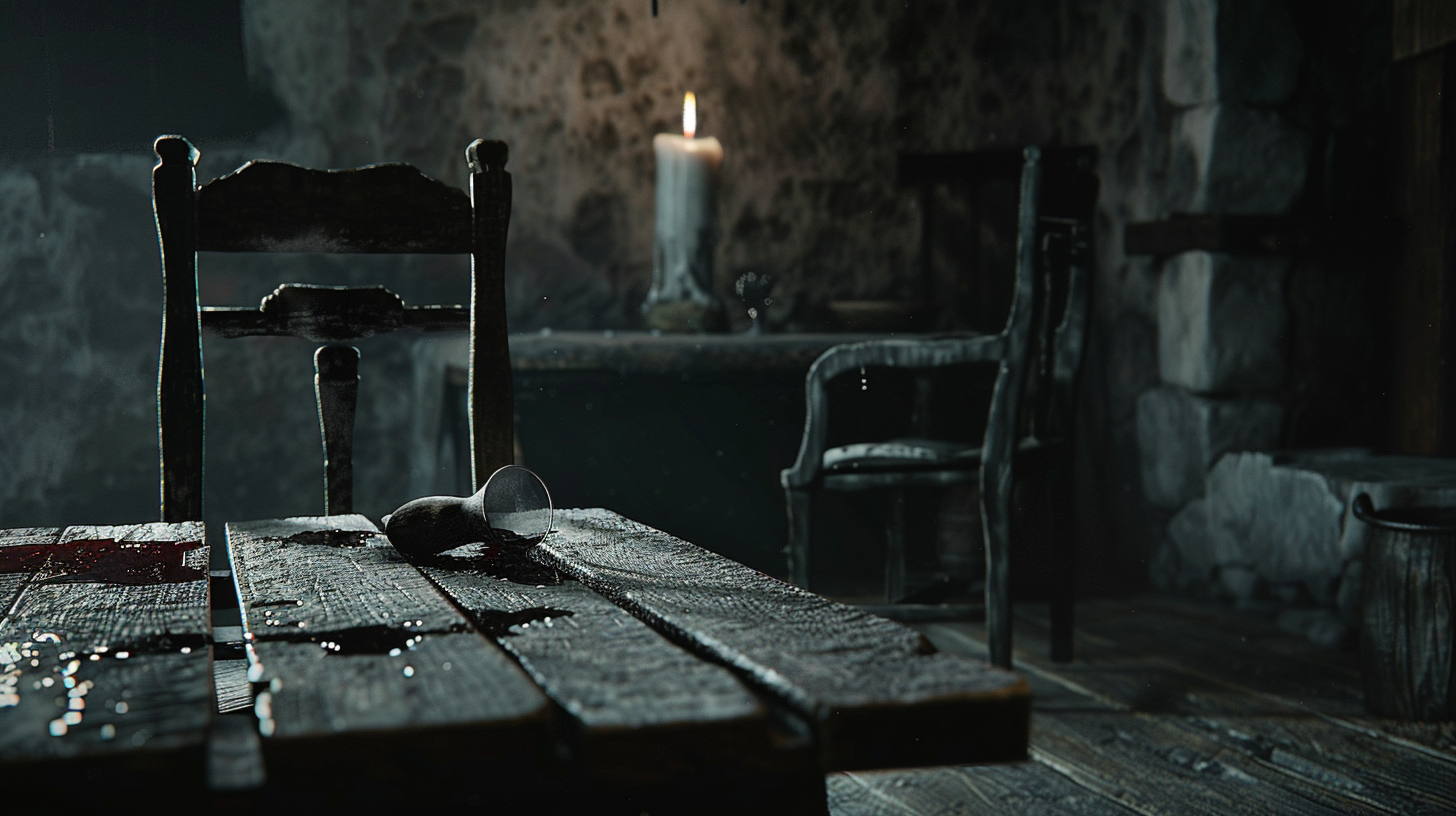
The Dread Pirate Roberts proposed a contest. He produced two wine goblets and a vial of iocane powder — a colorless, odorless, untraceable poison of Australian origin. He turned his back, distributed the powder between the goblets according to his own knowledge, and invited Vizzini to choose which goblet to drink from.
Vizzini engaged in an extended reasoning process. The process was, by conventional standards, impressive. He considered which goblet a clever man would poison, then which goblet a man who knew a clever man would poison, then which goblet a man who knew that a clever man would know that a clever man would poison — and so on through several iterations. He concluded, on the basis of this reasoning, that he knew which goblet was safe.
He was wrong.
Both goblets contained iocane powder. The Dread Pirate Roberts had, over a period of years, built a complete immunity to iocane powder through gradual exposure. He could drink from either goblet without consequence. Vizzini's reasoning — however sophisticated — was operating on a false premise: that one goblet was poisoned and one was not. The entire edifice of his analysis was constructed on top of an assumption he had not verified and could not have verified with the information available to him.
Vizzini died laughing. The Institute has no comment on that detail. It is in the record.
Analysis: Why This Is Blunder No. 2
Blunder No. 2 — never go in against a Sicilian when death is on the line — is, at its structural core, a warning about the limits of visible information in a high-stakes contest. The "Sicilian" in the formulation is a counterparty who has cultivated advantages that are not visible to you, prepared for contingencies you have not considered, and whose full capability profile you cannot accurately assess from observation alone.
The Dread Pirate Roberts was, in this instance, the Sicilian. He had spent years building an immunity. The immunity was invisible. Vizzini had no mechanism for detecting it. He substituted reasoning for information — constructed an elaborate logical framework — and the framework was irrelevant because it was built on a false foundation.
Vizzini was, by his own account and by reasonable external assessment, the cleverest person at the table. This is almost certainly true. He was also wrong. These facts coexist. They coexist because cleverness applied to incomplete information produces clever wrong answers, not correct ones. Vizzini's cleverness was real. His information was incomplete. The incomplete information was the operative variable.
The Institute notes that Vizzini himself identified this blunder. He knew the category. He believed, in the specific instance, that he was operating outside the blunder's scope — that his cleverness was sufficient to overcome whatever informational asymmetry existed. He was the exception, in his own assessment.
He was not the exception. There are no exceptions. This is why the blunder is canonical.
Institutional Significance
The Vizzini Institute was established in Vizzini's memory, and this case is the Institute's foundational document. It is tempting to read it as a cautionary tale about the gap between knowledge and behavior — knowing the rule and breaking it. The Institute resists this reading, because it implies that better adherence to known rules would have prevented the outcome.
The deeper reading is this: Vizzini did not break a rule he knew. He applied a rule he knew — reason carefully, use all available information, think several moves ahead — and was defeated by information that was not available. The problem was not his reasoning. The problem was the premise. And the premise was invisible.
The lesson the Institute draws from this is not "follow the rules more carefully." The lesson is: in high-stakes engagements with counterparties whose full capabilities you cannot observe, the most sophisticated visible analysis may still be operating on a false foundation. Confidence in your reasoning process is not the same as confidence in your premises. The two are different things. Vizzini's reasoning process was sound. His premises were wrong. He died of the difference.
The Institute does not find this ironic. The Institute finds it instructive. The distinction matters.
Registry Committee Note: This document is reviewed annually. No substantive changes have been made since the initial filing. The Committee considers the documentation complete. The Committee does not expect to amend it. The circumstances do not change. The lesson does not change. The documentation stands.